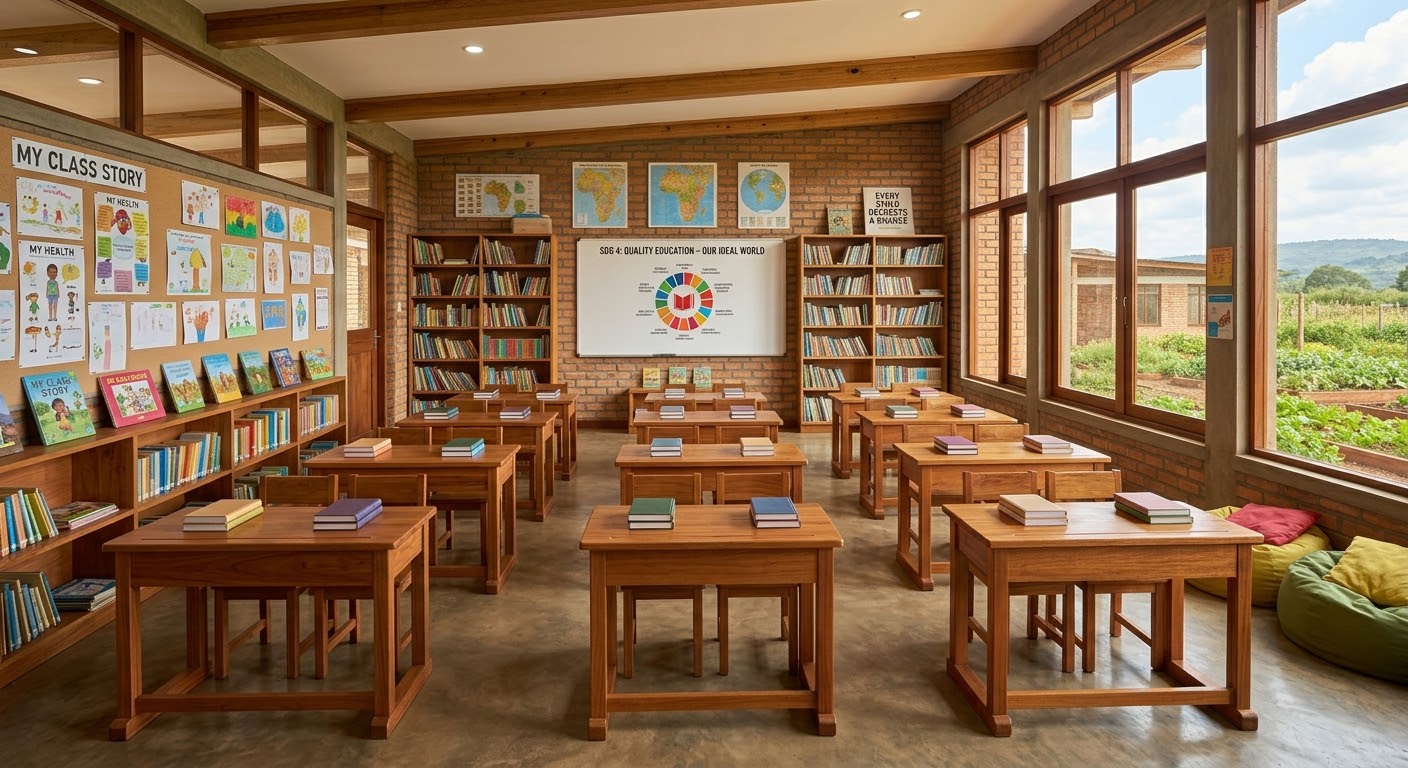
THE FIRST LESSON.
At seven o’clock, Wanjiru enters her classroom, humming joyfully with her books in hand . The rain water tanks outside are full, the desks sturdy, and every student has the materials needed for the morning. No one is late for class. No one was delayed on the way to school , the bridges held firm against the heavy rains.
The teacher walks in, everyone settles, and class begins. In a single 45-minute lesson, the teacher can guide every student identifying who needs help without leaving anyone behind. Lessons connect classroom knowledge to the community. Wanjiru joins her classmates to tend the school garden, harvesting fresh vegetables that are cooked for lunch, and some sold to the surrounding villages.
Every child gets a chance to participate fully in every school activity without feeling left out because they are missing a textbook or have unpaid fee. Parents and teachers work together to support attendance, learning, and well-being, helping each child recognise that education can lead to many possible futures, not only the one circumstances once seemed to offer.
In this world , no child loses an entire term because rains destroyed a road. No teacher has to choose which child deserves individual attention. No family has to decide between buying a uniform and putting food on the table.
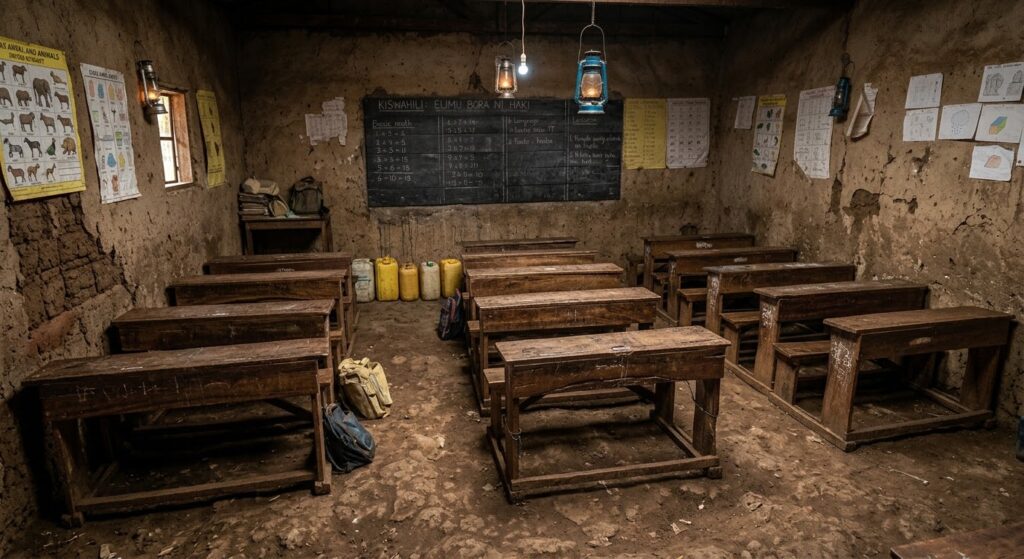
BUT THIS IS NOT YET THE REALITY FOR MILLIONS OF CHILDREN.
In most communities, the hardest work begins before the first lesson. Each morning, students walk long distances carrying jerry cans of water so that lunch can be prepared at school. They sit in class rooms with broken windows, doors that do not close properly, and desks held together by repeated repairs. And in some areas, there are no desks or classrooms.
Due to lack of enough books, they squeeze together to share materials, while teachers manage classes too large to give individual support to learners who are falling behind. When floods or droughts interrupt schooling, some children can not return until the crisis has passed. They miss lessons, struggle to catch up, and may remain behind without anyone identifying the gap early. Others opt to drop out entirely. Coupled with poverty, uniform costs, unequal disability support, and the demands of a new curriculum, the pressure increases on schools that are already trying to do more with less.
Quality education will not be achieved by classrooms alone. It will require teachers with support, schools with resources, families free from impossible choices, and communities that refuse to let a child’s future be determined by where they are born.
We all have a role to play in bridging the gap between today’s struggle and tomorrow’s reality:
1. Ask clear questions about how education funds, and bursary allocations are being spent in the community.
2. Show existing community solutions such as grassroots feeding programs, and community-led education models not just problems.
3. Challenge the biases against vocational education, disability, and learners who need extra support.
4. Partner and support trusted schools with learning resources, mentorship or infrastructure repairs.
Children should not carry the weight of our failure to provide the education they deserve. The first lesson of quality education is simple: every child matters, and every child deserves a chance.