BEYOND THE TAP.
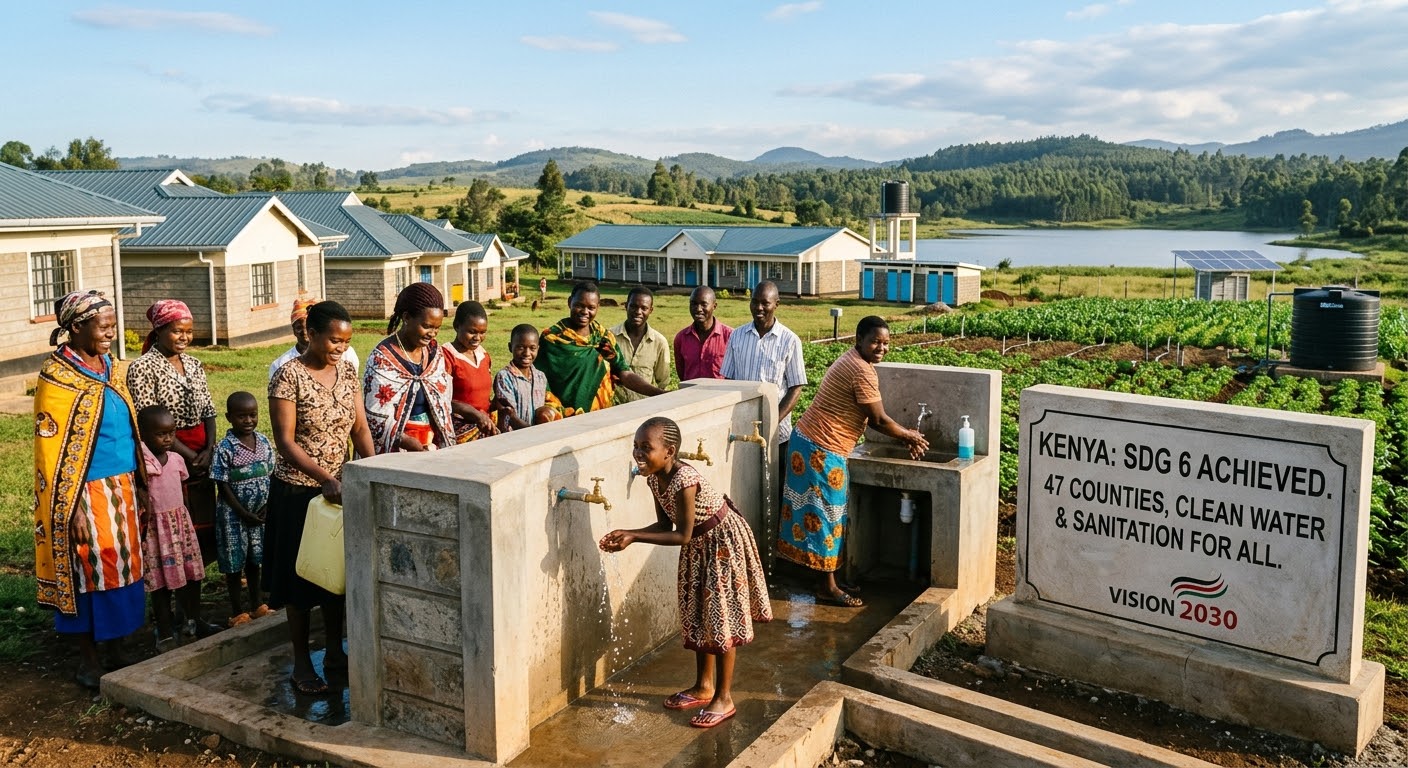
Wanjiru lives in a Kenya where the daily burden of carrying water across long, exhausting distances is just a memory. In both Rural villages and Urban neighbourhoods , clean, treated water flows reliably from taps and is paired with safe, private sanitation facilities. Communities are healthier, especially women and young girls who now reclaim their time to pursue education, and economic opportunities.
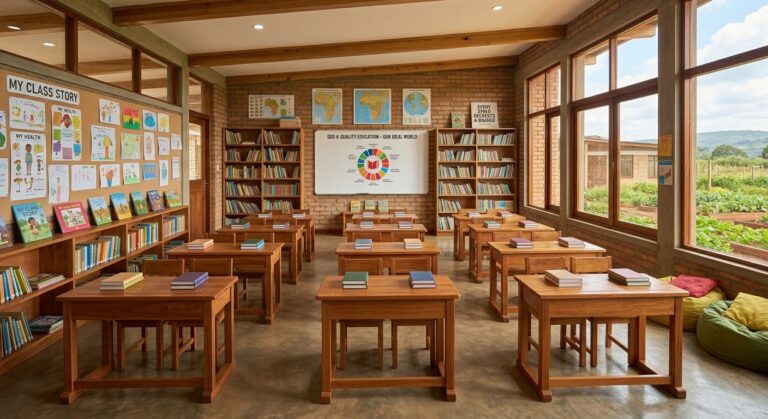
Across the country, there is a reflection of this dramatic shift toward health and human dignity. Schools feature modern sanitation blocks, healthcare dispensaries operate with constant running water, while cities manage municipal waste through decentralized treatment plants, that protect river corridors from sewage and chemical pollution.
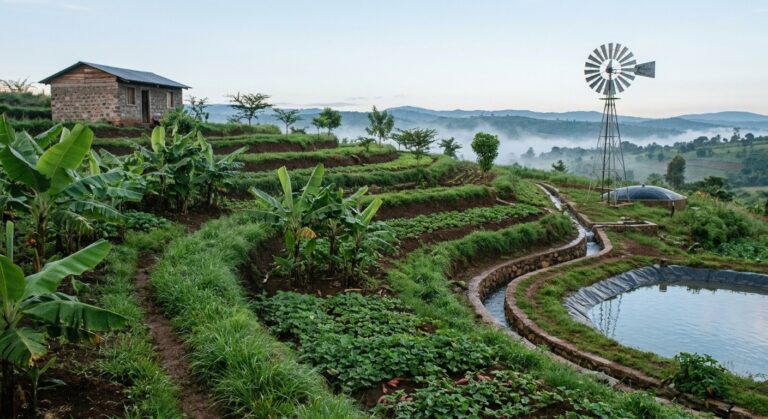
Wanjiru watches her parents who are small-holder farmers like most of their neighbours, use solar- powered drip irrigation fed by earth pans and sand dams to grow crops through dry season. The scorching Mbeere sun channelled into a force for good, putting an end to seasonal hunger.
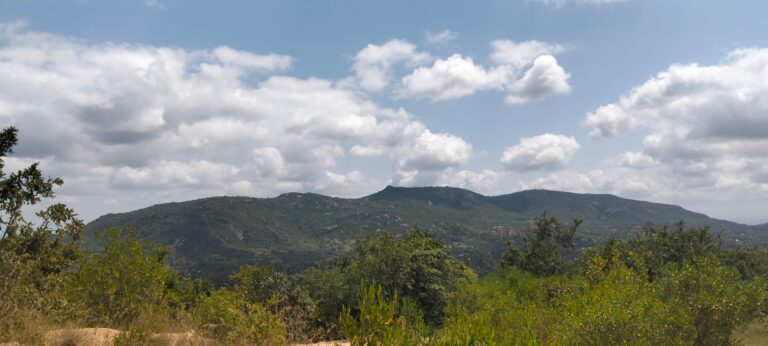
Behind this prosperity is a fully restored natural environment. Kenya’s major water towers such as the Mau complex, Mt.Kenya and the Aberdares are reforested and protected, regulating river flows naturally. This guarantees that clean water and proper sanitation remains a permanent, self-sustaining reality for generations to come.
UNFORTUNATELY, THIS IS NOT TODAY’S REALITY FOR MILLIONS IN KENYA.
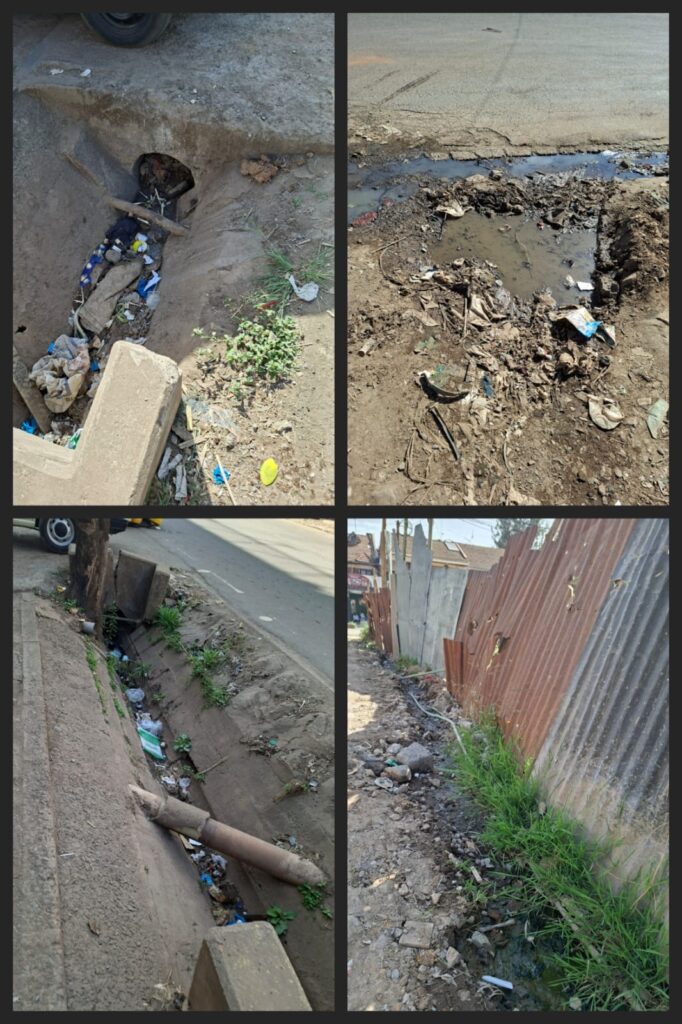
Permanent access to clean water and proper sanitation is hindered by persistent structural, financial, and climate challenge. Over 40% of Kenyans still lack basic drinking water services, and fewer than 30% have access to safely managed sanitation. While government projects have expanded boreholes, and pipelines, severe gaps remain between connected urban centres and rural or arid regions.
With rapid expansion of urban settlements, infrastructure has failed to match population growth. Untreated municipal waste and industrial run-off continue to pollute major river corridors, triggering localized waterborne disease outbreaks during heavy rains. At the same time, those in informal neighbourhoods rely on overcrowded communal latrines and often pay inflated prices for basic water needs.
Climate shocks are a major threat to water security across the country. Long-term season droughts and intense floods have damaged water infrastructure, polluted groundwater, and disrupted supply networks. With reports of logging and timber transportation activities at Aberdare forest, while we are anticipating El-Niño rains, our vulnerability to environmental disasters as a country just heightened. Deforestation reduces the soil capacity to absorb rainwater, turning massive volumes of rainwater into surface run-off. This creates drainage failure, severe flood risks, and possible mudslides along steep escarpments with loose soils.
Success depends on active community-led participation. Everyday citizens can take meaningful, practical steps to safeguard water resources and elevate sanitation standards:
• Change begins at home by shifting how rain water is harvested, conserved, and protected by eliminating waste.
• Participating in local reforestation, protecting local water sources, and restoring natural drainage.
• Demand of accountability, engaging in civic advocacy, and community -led governance.
• A cultural commitment to health and dignity within every homestead and public space.
A drop of equity starts by bridging Kenya’s water and sanitation gap in this era of climate extremes. One tap, one community, and one catchment at a time.