
Harvesting Stones, Burying Potential: The High Cost of Unexplored Alternatives
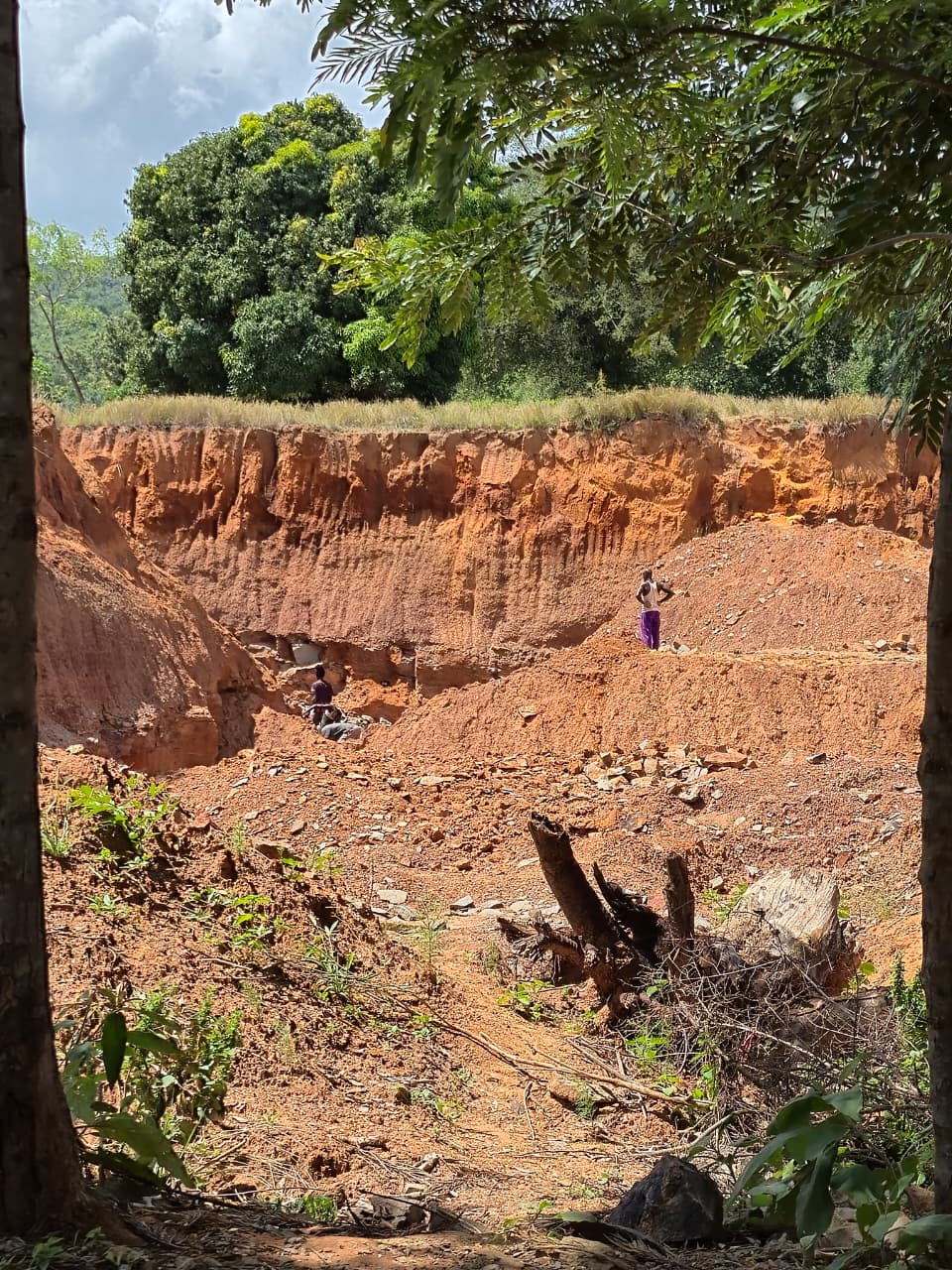
Every man for himself. This business is all about survival. No internal or external support. Scratch that, it is not even commercialized, so who cares about us? Those who buy only care about whether the stones are good quality, the right size, and available. If they don’t get that, they drive their trucks somewhere else. No one cares about the people, the hours poured into the earth, or the days spent inhaling sharp gray dust under a scorching sun. No one looks back once the stones are hauled away.
This is the unspoken reality of Nganduri in Mbeere south, Embu. A sun-drenched landscape of wide skies, acacia trees, and the sweetest mangoes whose true identity lies buried deep in open-air stone quarries. Our small town that is well-known across the region for producing excellent construction stones. The irony is stark: our workers harvest the literal foundations of modern infrastructure and grand homes elsewhere, while our own local development remains entirely stagnant. But as long as the meagre daily wages are paid, no one complains. There is a profound silence where collective awareness should be, the workers are too consumed by immediate survival to wonder where the fruits of their heavy labour go after extraction.
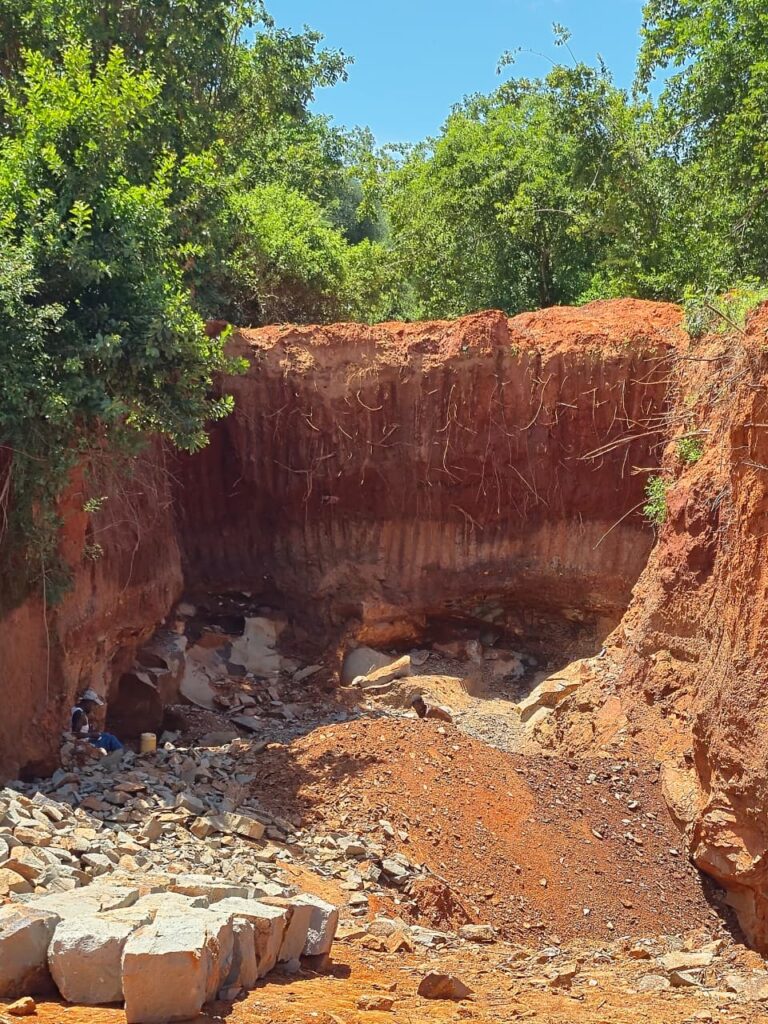
Behind the heavy blocks of stone are human beings trapped in what can only be described as a survival syndrome. They dig deep into the earth, risking everything just to see if a seam of stone exists, and then the gruelling extraction begins. It is an environment completely devoid of basic safety, no masks, no gloves, no boots. Accidents are a casual part of the routine. On any given day, you will see someone smash a finger during while crushing stone into ballast(kakoto), or hear whispers of someone else narrowly escaping being buried alive under a sudden rock fall.
What is truly devastating is that this cycle is no longer dictated by a lack of education. If you visit the quarries today, you will find literate people working alongside the illiterate. Those who aren’t in the pits are out on the roads, operating boda-bodas all day without a single piece of protective gear.
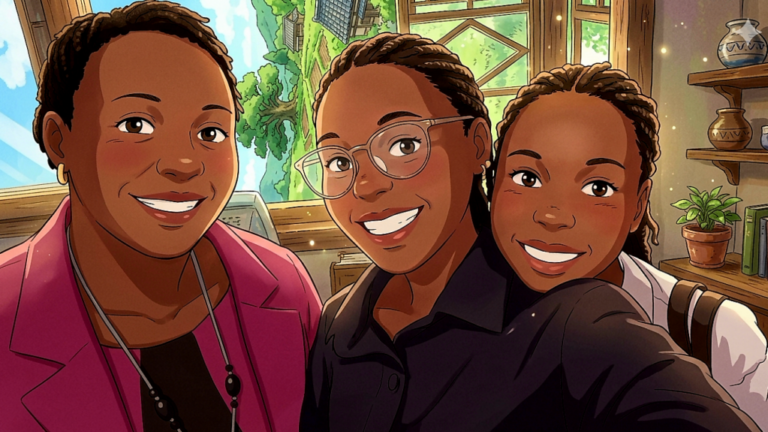
A few of my close friends and I, all of us born and raised around Nganduri recently visited these sites. Looking at the dust-covered faces of young men and women, we asked each other a heavy question: What exactly went wrong?
We realized that our biggest advantage in life wasn’t superior intelligence, it was simply having parents who showed us that there is more to the world. They chose a different path and actively guided us so that our career options weren’t bound by the geographical limits of our home village.
In Nganduri, that wider vision has been completely crushed by economic pressure. Money is the only language spoken. If you have it, you can speak loudly about your ambitions. If you don’t, society gently but firmly helps you bury those dreams, even when an opportunity is staring you in the face. The promise of earning a quick ksh 500 a day sells much better than the abstract idea of waiting for a certain 20,000 shillings at the end of a month. Can we blame them? No. When daily bills, school fees, and putting food on the table collide, long-term planning becomes a luxury no one can afford.
This survival mind-set has warped the very social fabric of our community. Historically, quarry work was viewed through the lens of physical male strength. Today, women are increasingly entering the pits. Yet, this shift hasn’t brought a progressive redefinition of “breadwinning.” Everyone is just working to stay alive. The women sweat in the dust to ensure their children have a meal at night. Tragically, many of the men drink their daily earnings away by evening, taking absolutely nothing home to their families.
The labour doesn’t just exhaust the body, it completely hollows out the human spirit. If you were to magically lift the financial pressure from these workers for just one day and ask what they would rather be doing, the heart breaking truth is that the majority cannot think beyond the quarry. Their imagination has been spent. They wouldn’t use the day to explore hidden potentials, they would simply wish to rest. Chronic illnesses from years of inhaling stone dust are pushed aside. Physical exhaustion is ignored. Medical cover is non-existent, and medical check-ups are treated as a distraction from the urgent guarantee of a day’s job.
Perhaps the most surprising and terrifying aspect of Nganduri’s quarries is the complete absence of solidarity. In most struggling communities, shared hardship gives birth to informal support systems, shared childcare, or chamas (collective micro-savings groups). Not here. There is zero knowledge about savings, no communal safety nets, and an ever-increasing social pressure on the youth to marry early and start families with absolute zero stability. It remains a fiercely isolated, “every man for himself” environment.
This exploitation is fuelled by government neglect. While local authorities eagerly collect taxes from the stone trucks, they completely ignore labour safety and the environmental ruin left behind. Once the stones run out, massive quarries are left wide open and abandoned. These gaping craters devour fertile land, destroy the soil, and turn our beautiful landscape into hazardous death traps leaving the community to inherit nothing but environmental decay and empty pockets.
Change will not happen by accident. If we want to look back in five years with gratitude, we must deliberately disrupt this cycle.
We must start by introducing basic financial literacy and helping the women workers establish the very first quarry-side chamas, breaking the isolation and teaching the power of collective savings. Concurrently, those of us who were guided down different paths must return to bridge the gap, establishing mentorship programs in local schools to expose the next generation to alternative careers before the quarry claims their potential too. It is time to stop burying our dreams in the same earth from which we harvest our stones.

Such a beautiful piece. carrying a heavy truth that so many of us are afraid to voice.
Perfectly described. Keep voicing the forgotten minority. You’re doing a great job darling